Optimizing Hormonal Health After 35: The Modern Woman’s Blueprint
There is an invisible shift that happens right around the mid-thirties. You wake up one day, and suddenly, the lifestyle habits that kept you lean, energized, and sharp throughout your twenties stop working. Your go-to diet feels ineffective, fat begins accumulating in unfamiliar places, and that afternoon mental fog becomes a permanent resident.
When women experience these changes, they often blame it on “just getting older.” In reality, your body is entering a profound neuroendocrine transition. Optimizing hormonal health after 35 is not about fighting the aging process—it is about rewriting the rulebook to match your body’s changing chemistry.
If you are noticing these early shifts, you are not alone, and your body is not broken. By understanding how your master hormones interact, you can realign your metabolism, protect your lean muscle, and reclaim your baseline vitality.
The Big Three: Understanding Your Endocrine Trio
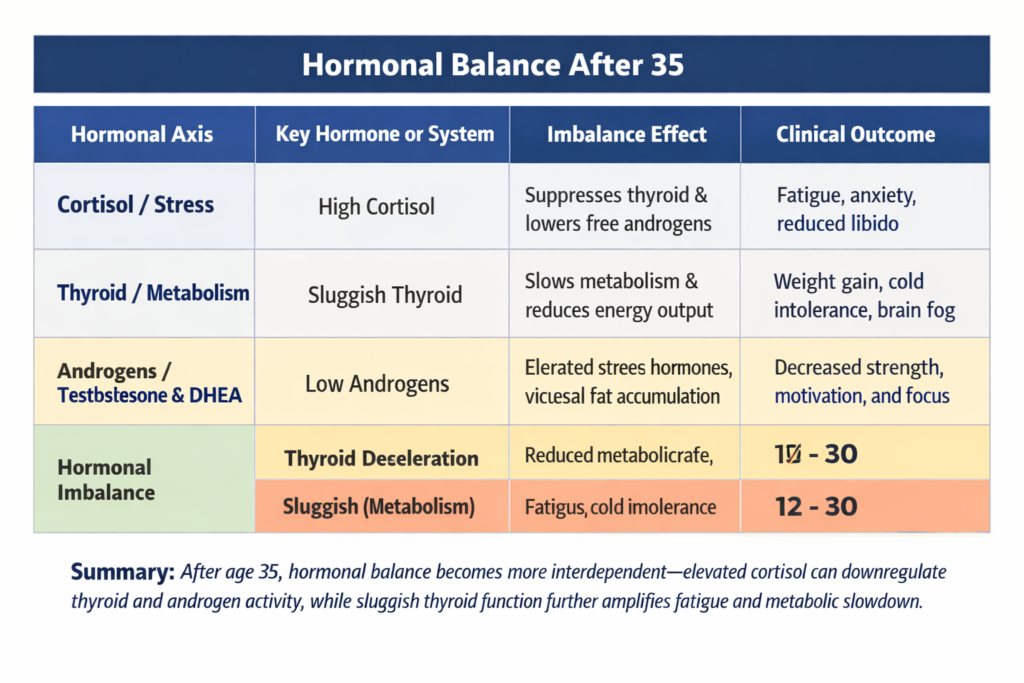
When we talk about female hormonal health, estrogen and progesterone usually dominate the conversation. However, after age 35, your vitality is governed by a delicate crosstalk between three distinct biological pillars: Cortisol, Thyroid, and Androgens (including Testosterone).
1. Cortisol: The Metabolic Hijacker
Cortisol is your primary stress hormone. In your twenties, your body can handle chronic work stress, poor sleep, and intense workouts without major metabolic consequences. After 35, your resilience to cortisol shifts.
When cortisol remains chronically elevated, it signals your body to actively store visceral fat around your midsection and break down lean muscle tissue for quick glucose. High cortisol also acts as a biological brake system, actively suppressing the production of your active thyroid and androgen hormones.
2. Thyroid: The Metabolic Thermostat
Your thyroid gland regulates the speed at which every single cell in your body operates. As estrogen fluctuations begin in your late thirties, thyroid sensitivity frequently declines. A sluggish thyroid leads to cold intolerance, brittle hair, stubborn weight gain, and that heavy, unrefreshing fatigue that a double shot of espresso cannot fix.
3. Androgens: The Forgotten Vitality Anchors
While often labeled as “male” hormones, women require healthy baseline levels of androgens—specifically DHEA and testosterone—to maintain bone density, cognitive focus, libido, and lean muscle structure.
When female androgen production drops after 35, women experience a distinct loss of physical stamina, prolonged recovery times after exercise, and a frustrating softening of muscle tone, even with consistent strength training.
The Cortisol-Metabolism Connection
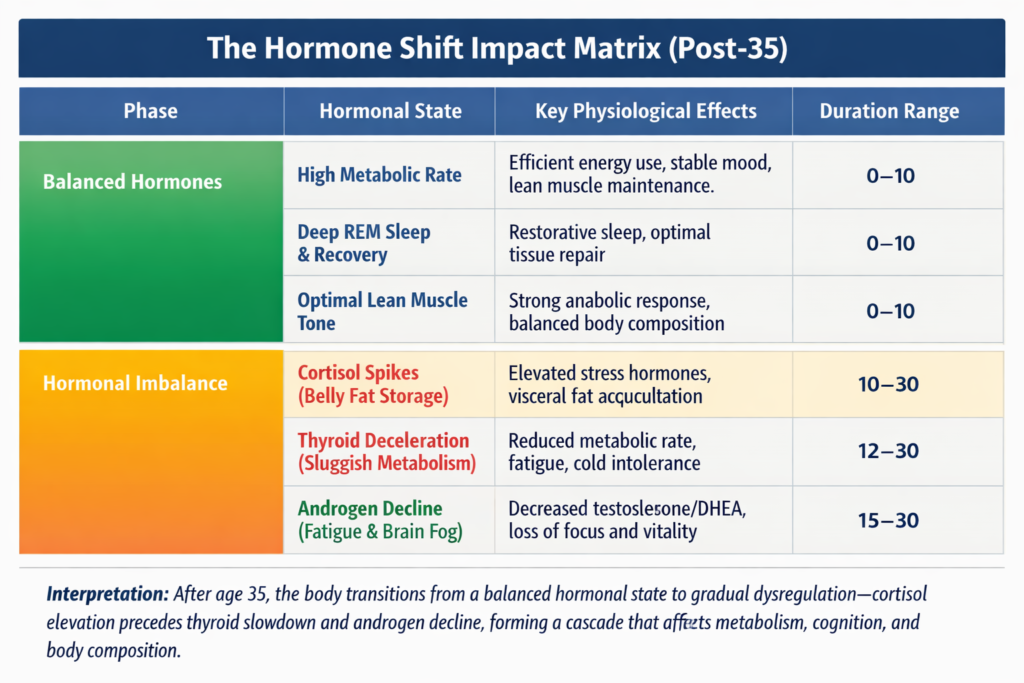
To visualize how these hormonal shifts directly impact your physical composition, look at the timeline of daily energetic and metabolic efficiency as hormones fall out of balance:
Actionable Strategies to Rebalance Your Hormones Naturally
True endocrine optimization does not come from a single magic pill; it requires a strategic, layered approach that addresses lifestyle, nutrition, and intelligent supplementation.
1. Shift from Depletion to Nourishment
If you are struggling with your weight, your natural instinct might be to slash calories and increase your cardio workouts. Post-35, this is a recipe for metabolic disaster. Severe calorie restriction combined with exhaustive cardio sends cortisol levels through the roof, forcing your body to hold onto fat reserves for survival.
Instead, focus on metabolic conditioning:
- Prioritize lifting heavy weights 3 times a week to stimulate natural androgen production and build metabolically active muscle.
- Keep your cardio short, intense, or purely restorative (like long, low-stress walks in nature).
- Ensure you consume adequate dietary proteins and healthy fats, which serve as the cellular building blocks for all hormone synthesis.
2. Master the Circadian Rhythm
Your endocrine system runs entirely on an internal 24-hour clock. When you expose your eyes to bright blue screen light late at night, you artificially suppress melatonin and cause a nocturnal cortisol spike. This destroys your deep sleep architecture, ensuring you wake up with high blood sugar and intense sugar cravings the following morning.
Aim to view natural sunlight within 30 minutes of waking up to set your morning cortisol curve correctly, and turn off stimulating digital devices at least one hour before bed.
3. Intelligent Supplementation
When lifestyle modifications need an extra push, targeted natural supplementation can help bridge the gap. Rather than turning to synthetic hormone replacements prematurely, many women benefit from adaptogenic herbs and micronutrients that assist the body’s natural pathways.
- Ashwagandha (KSM-66): Clinically proven to help desensitize the central nervous system to chronic stress, effectively lowering circulating cortisol.
- Tongkat Ali: Helps release bound, inactive hormones within the female body, restoring natural physical stamina and mental focus.
- Zinc and Vitamin D3: Essential cellular co-factors that directly support thyroid efficiency and baseline ovarian hormone production.
For a comprehensive look at an all-in-one natural formulation designed to provide these exact metabolic and androgenic nutrients, you can read our detailed breakdown of the market’s leading formula in our comprehensive [Alpha Surge review].
Conclusion: Play the Long Game
Optimizing your hormonal health after 35 requires a shift in mindset. Your body is no longer a machine you can starve, stress, and whip into submission. It is a finely tuned ecosystem that demands nourishment, strategic rest, and targeted biological support.
By prioritizing your sleep quality, protecting your muscle mass through lifting, and utilizing smart, natural supplementation, you can easily bypass the common pitfalls of aging and step into the most vibrant, confident, and energetic chapter of your life.